


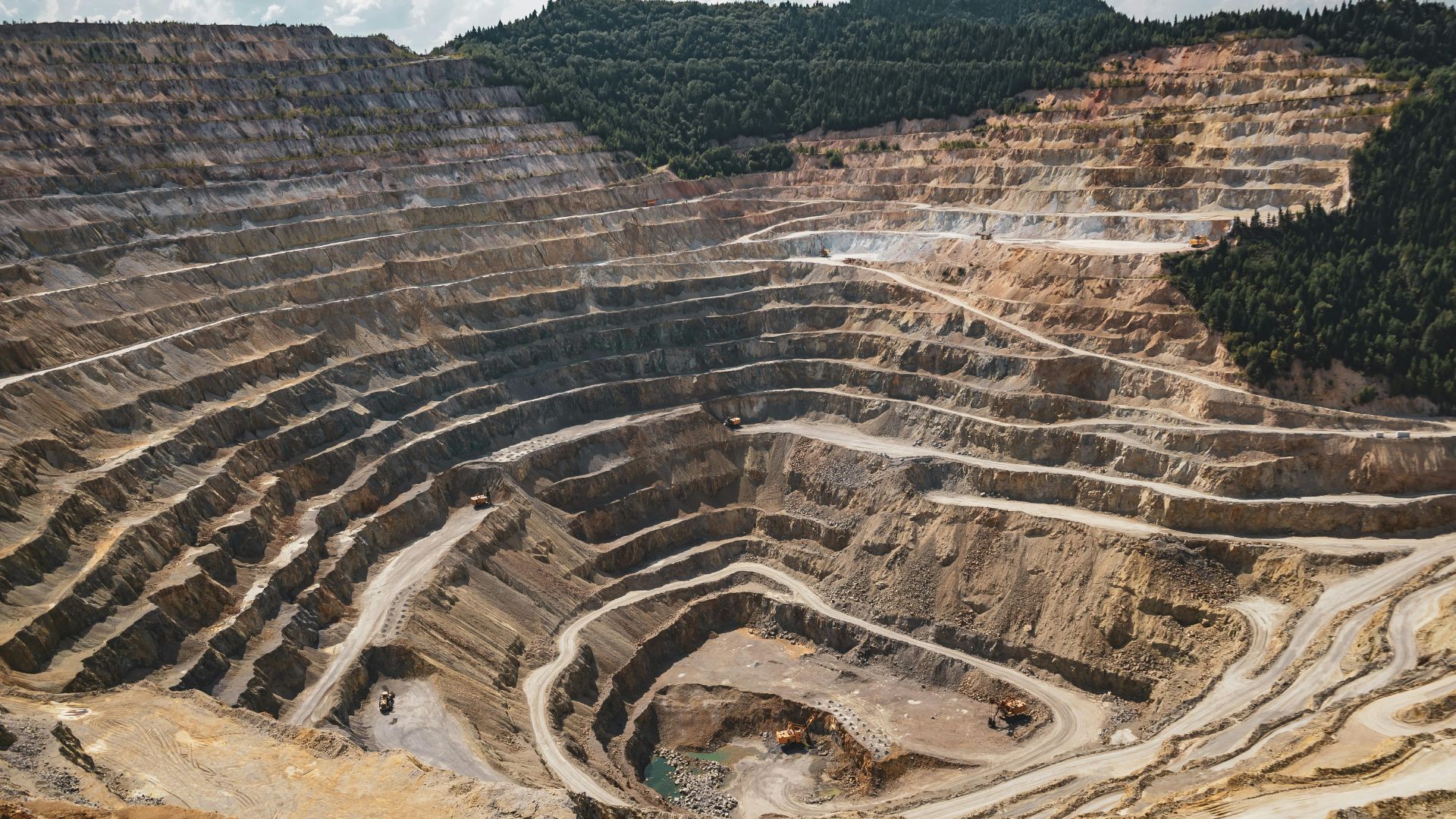
The Coal Boom, an Economic Time Bomb: Reflections from East Kalimantan
For more than two decades, East Kalimantan has been one of the primary pillars of national coal production. The structure of the province's Gross Regional Domestic Product (GRDP) shows a consistent dominance of the mining and quarrying sector, accounting for roughly one-third to more than 40% of the total in recent periods (BPS, 2023). On the export side, dependence is even more pronounced, with coal commodities dominating the value of regional exports (BPS, 2023). This pattern confirms that mining is the primary base sector sustaining inflows of income from outside the region.
In the framework of regional economics, base sectors play a strategic role as drivers of broader economic activity through the multiplier effect. However, when the base sector is overly concentrated in a single commodity that is heavily subject to global price volatility, the economic structure becomes fragile. Experience across coal price boom-and-bust cycles has shown how East Kalimantan's economic growth is highly sensitive to international market dynamics. When prices surge, growth rises significantly; when prices fall, a slowdown is quickly felt across downstream sectors. This kind of dependence is not merely a matter of short-term fluctuations, it concerns long-term structural risk. The global energy transition agenda and increasingly firm commitments to carbon emission reductions have the potential to suppress coal demand over the medium and long term (IEA, 2022).
Reports from various energy institutions indicate that while coal continues to be used, global investment trends are shifting toward renewable energy and low-carbon technologies. For regions dependent on fossil commodities, this shift is not merely an environmental issue, it is a question of economic sustainability. These risks also carry implications for regional fiscal resilience. A significant portion of regional revenue and fiscal transfers is closely tied to extractive activity, both through revenue-sharing funds and their indirect economic effects. When revenue from this sector declines, fiscal space contracts and the capacity to finance public services comes under threat (Ministry of Finance, 2022). Without robust alternative sources of growth, regions may face significant fiscal pressure. This is precisely where the urgency of diversifying the base sector becomes critical. Diversification is not simply an effort to expand the list of economic sectors, it is a strategy for building a more stable and sustainable foundation for growth. Regions need to develop sectors with strong backward and forward linkages, create more diverse employment, and increase domestic value addition. The momentum of building the new national capital at Nusantara should serve as a catalyst for this structural transformation. Yet this opportunity will only reach its potential if accompanied by mature economic planning. Without a targeted diversification strategy, large-scale development risks creating merely a short-term spike in activity without fundamentally altering the economic structure.
What must be emphasised is that base sector diversification must not be left too late. The history of many resource-dependent regions shows that when the primary commodity begins to weaken, the adjustment process can be extremely painful: rising unemployment, declining investment, falling regional revenues, and prolonged economic stagnation. The fiscal and social costs of such delay are often far greater than the investment costs of transforming early. Delaying diversification is equivalent to allowing a region to remain trapped in structural dependency. As global pressures intensify and markets shift faster than policy readiness, regions will be forced to adapt in conditions of crisis rather than in conditions of planning. In such a situation, policy space narrows and strategic options become limited.
The reflections from East Kalimantan therefore offer an important lesson for all extractive regions in Indonesia. Dependence on a single base sector can indeed produce high growth during certain periods, but it does not guarantee long-term resilience. Diversification must be deliberately designed through regional industrial policy, strengthening of human resource capacity, reformulation of fiscal incentives, and the development of non-extractive sectors with sustainable prospects. Economic transformation is not an option that can be deferred until a commodity loses its appeal. It is a strategic investment to ensure that growth is not merely high, but also stable, inclusive, and resilient to external shocks. If regions fail to prepare base sector diversification now, the consequences will be severe, and ultimately, it is the communities and future generations of those regions who will pay the price.
Author: Asri Pebrianti
This article also appears on Katadata. Read the original here.


