


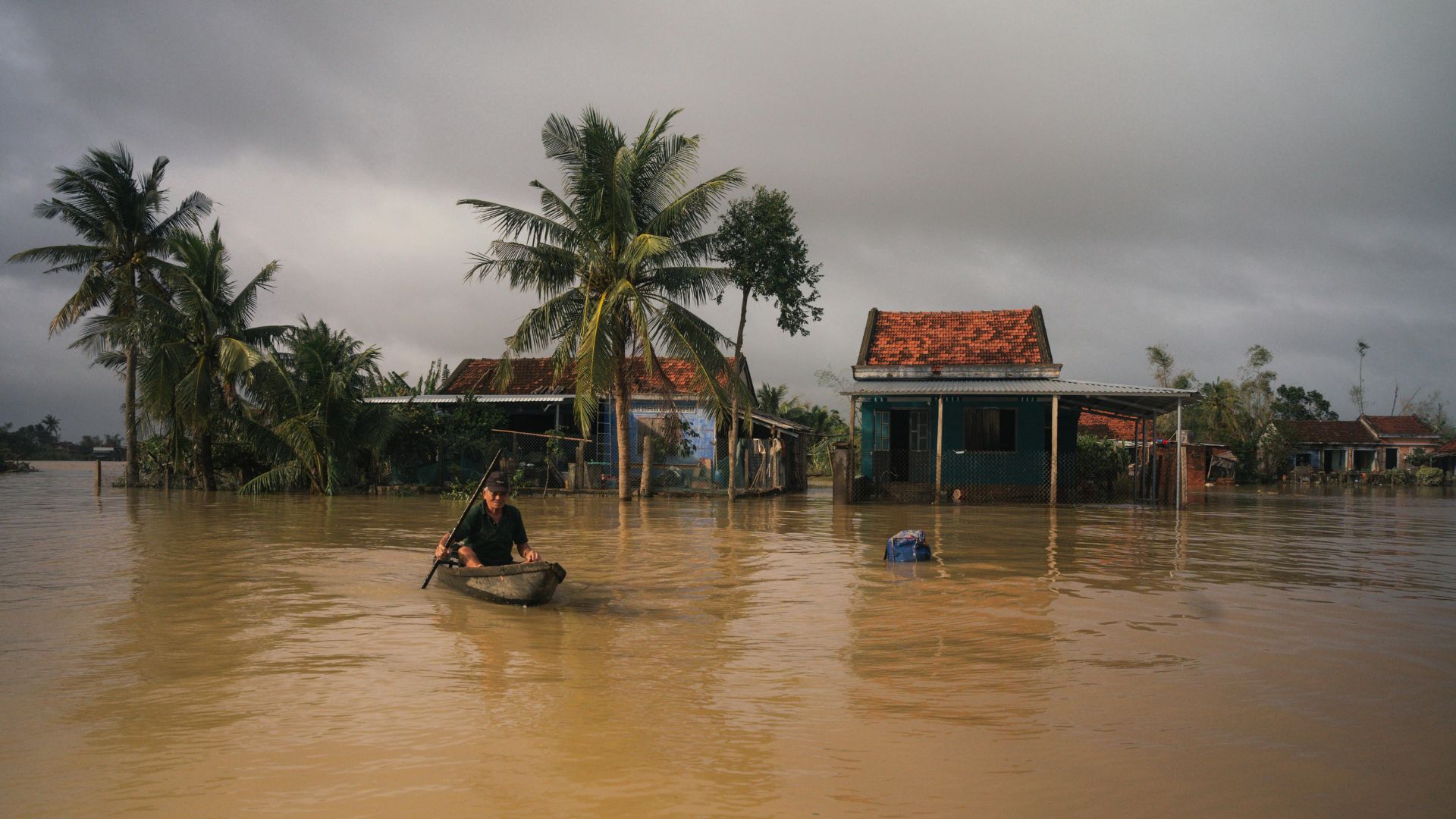
The High Cost of Delaying Climate Adaptation at the Regional Level
Climate change is no longer a global issue distant from local reality. It manifests as floods that destroy infrastructure, droughts that reduce harvests, coastal erosion that strips away settlements, and extreme weather that disrupts economic activity. Data from the National Disaster Management Agency show that more than 90% of disasters in Indonesia over the past decade have been hydrometeorological in nature (BNPB, 2024). In 2023 alone, 3,544 disaster events were recorded, and nearly all occurred at the district or city level. The implication is clear: climate change is a regional problem. Yet the challenge lies not only in the frequency of disasters but in their fiscal and economic consequences. When floods damage roads, bridges, schools, and health facilities, local governments are forced to redirect development budgets toward emergency response and rehabilitation. Expenditure that should be productive becomes reactive. A World Bank study estimates that economic losses from flooding in Indonesia could reach 2%–3% of GDP per year under extreme climate scenarios (World Bank, 2021). The bulk of the response burden falls on regional governments. This is precisely where the urgency of mainstreaming climate change adaptation into planning documents becomes critical. Without systematic integration into long-term regional development plans (RPJPD), medium-term regional development plans (RPJMD), and annual regional government work plans (RKPD), adaptation policy will remain a sporadic add-on rather than a structured development strategy. As a result, climate risk is never truly factored into public investment decision-making.
The experience of coastal areas along the North Coast of Java illustrates the real consequences of planning that has not fully integrated climate risk. The city of Pekalongan suffers tidal flooding almost every year; parts of the city are affected by permanent inundation, forcing the relocation of residents and disrupting economic activity (BPS Kota Pekalongan, 2023). Brebes Regency faces seawater intrusion that reduces the productivity of coastal agriculture (KLHK, 2022). Demak Regency experiences coastal erosion and land subsidence that threaten settlements and infrastructure (Bappenas, 2021). When these risks are not incorporated from the outset into spatial planning design, infrastructure development, and economic strategy, public expenditure becomes costly and repetitive.
The problem is that many regions still treat climate change adaptation as an environmental issue alone, rather than as a fiscal and development issue. Yet adaptation is a risk management strategy. Every rupiah invested in reducing vulnerability lowers the potential for future losses. The OECD and the Global Commission on Adaptation have shown that every US$1 invested in adaptation can generate economic benefits of US$4–US$10 through avoided losses and improved economic stability (OECD, 2022). Furthermore, the national policy framework has in fact already provided adequate space for integrating this agenda. Law Number 1 of 2022 on Fiscal Relations between the Central Government and Regional Governments (HKPD) promotes performance- and outcome-based budgeting. This approach opens the door for regions to incorporate climate resilience and disaster risk indicators as part of their development performance targets. Adaptation therefore need not stand alone; it can be integrated into basic service indicators, infrastructure resilience, and economic productivity. Financing support is also increasingly accessible. The Environmental Fund Management Agency (BPDLH) provides environmental financing schemes that can be accessed for ecosystem rehabilitation, environment-based performance programmes, and low-carbon initiatives (BPDLH, 2023). With these fiscal and institutional instruments in place, the argument that financing constraints justify delaying the integration of adaptation into planning is becoming increasingly difficult to sustain.
What is more concerning is not the absence of instruments but the delay in acting. Delayed mainstreaming of adaptation creates compounding costs. First, recurring fiscal costs resulting from development patterns that are not risk-resilient. Second, economic costs in the form of lost productivity and reduced investment attractiveness. Third, social costs manifested as growing vulnerability among the poorest communities, who are the most exposed to disasters. The cost of inaction is far greater than the cost of adapting. When risk has already become a crisis, the space for policy narrows and options become limited. Regions are forced to respond under emergency conditions rather than within a strategic planning framework. Adaptation carried out in haste is almost always more expensive and less effective than adaptation designed from the outset.
Mainstreaming climate change adaptation is not merely about fulfilling national or international commitments. It is a strategy for protecting fiscal sustainability, maintaining local economic stability, and ensuring that the quality of basic services is preserved amid climate uncertainty. Adaptation must shape the way regions set spending priorities, define performance indicators, design spatial plans, and determine the direction of investment. If the future of Indonesia's development rests on the strength of its regions, then regional resilience to climate risk is the primary foundation. Climate change adaptation is not an optional addition to planning documents — it is a prerequisite for sustainable growth. Regions that delay will face far heavier consequences, while those that mainstream it are preparing themselves to survive and thrive in a changing world.
Author: Asri Pebrianti
This article also appears on Katadata. Read the original here.


